Most people shopping for aftermarket car parts or air conditioning equipment never think twice about where the marketplace itself comes from - until a transaction goes wrong. The platform you choose shapes everything: the price you pay, the fraud risk you absorb, and how quickly a part actually arrives at your door. Yet the ecosystem of ac trading platforms has expanded so rapidly that even experienced buyers struggle to distinguish trustworthy digital storefronts from poorly moderated classifieds flooded with junk listings.
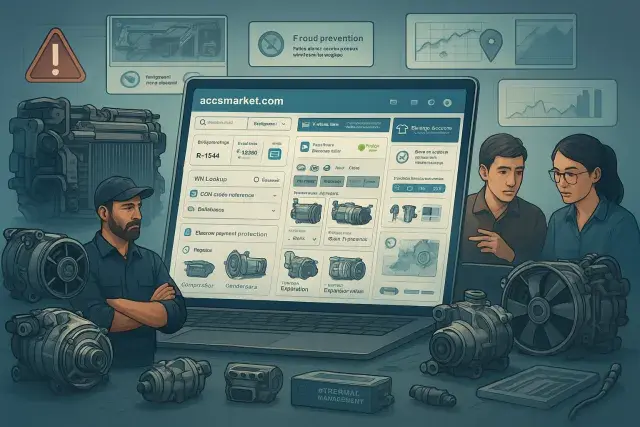
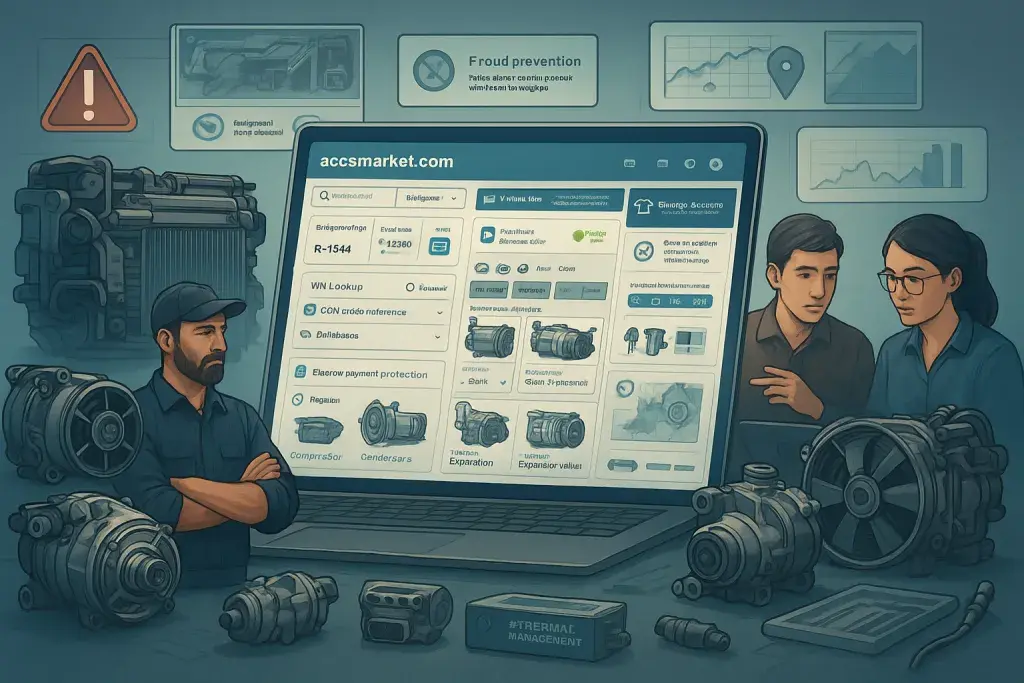
The automotive aftermarket is one of the largest and most fragmented retail sectors in the world. Buyers range from professional mechanics sourcing bulk components to weekend DIY enthusiasts hunting down a single discontinued bracket. Sellers include independent vendors, dismantlers, OEM overstock distributors, and specialty HVAC suppliers. Connecting all of them efficiently requires more than a basic listing page - it demands verification systems, category depth, and payment infrastructure built for high-value physical goods. One example of a purpose-built ac marketplace is accsmarket.com, which positions itself specifically for trading accounts and digital assets alongside physical automotive goods, reflecting how hybrid platform models are increasingly common in this space.
This article maps the landscape of digital vehicle marketplaces for automotive classifieds and aftermarket car parts sales, examines what separates reliable platforms from risky ones, and gives buyers and sellers the framework they need to make informed decisions. Whether you are sourcing air conditioning equipment sales inventory or listing a full vehicle, understanding how these platforms work is the difference between a smooth transaction and a costly mistake.
Understanding the Landscape of AC Trading Platforms
How AC Trading Platforms Differ from General Marketplaces
General-purpose marketplaces like broad e-commerce sites handle enormous variety, but that breadth is precisely their weakness when it comes to automotive and HVAC goods. A buyer searching for a compressor clutch or an R-410A-compatible expansion valve needs a platform that understands part compatibility, condition grading, and fitment data - not one optimized for selling shoes and kitchen appliances.
AC trading platforms built specifically for automotive and climate control equipment operate differently. They typically integrate vehicle identification number (VIN) lookup tools, OEM cross-reference databases, and condition classifications that align with industry standards. Listings carry structured data - year, make, model, trim, refrigerant type - rather than freeform text that forces buyers to guess whether a part fits their vehicle.
The structural difference matters commercially too. Specialized platforms attract buyers with genuine purchase intent, which compresses the time-to-sale for sellers. A professionally listed compressor on a dedicated automotive platform will typically outperform the same listing on a generalist site, both in visibility and in the quality of inquiries received.
The Role of Digital Infrastructure in Modern Parts Trading
Behind every functional digital vehicle marketplace is a layer of infrastructure that most users never see: catalog APIs that sync part numbers across databases, escrow or payment-hold systems that protect both parties, and review mechanisms that create accountability for repeat traders.
Platforms that have invested seriously in this infrastructure show it clearly. Search filters are granular. Part condition descriptions follow a shared taxonomy - new, remanufactured, used-tested, used-untested, core. Shipping calculators account for oversized freight, which matters enormously for bulky HVAC assemblies and engine components. These features are not cosmetic; they directly reduce disputes and returns.
Platforms that lack this infrastructure tend to push disputes into informal resolution - email threads, PayPal claims, social media complaints. That outcome costs everyone time and erodes trust in the broader aftermarket ecosystem.
Key Metrics That Define a Reliable AC Trading Platform
When evaluating any platform for air conditioning equipment sales or general aftermarket parts, several metrics deserve close attention:
- Seller verification depth - does the platform confirm identity, business registration, or inventory legitimacy?
- Dispute resolution track record - how are claims handled, and what is the typical resolution timeline?
- Listing data quality - are structured fields enforced, or can sellers post incomplete information?
- Payment security - does the platform hold funds until delivery confirmation, or release immediately upon order placement?
- Return policy infrastructure - does the platform facilitate returns, or leave it entirely to buyer-seller negotiation?
No platform scores perfectly across all five, but the best ones score consistently well across at least three or four. Weak performance on payment security or dispute resolution is a hard disqualifier for high-value transactions.
Automotive Classifieds: Structure, Strengths, and Limitations
What Makes a Strong Automotive Classifieds Platform
Automotive classifieds occupy a distinct space in the broader marketplace ecosystem. Unlike transaction-facilitated platforms that process payments end-to-end, classifieds primarily connect buyers and sellers and step back - leaving negotiation, inspection, and payment to the parties themselves. This model works well for vehicles, large assemblies, and locally sourced parts where in-person inspection is practical.
The strongest automotive classifieds platforms compensate for their hands-off transaction model by investing heavily in listing quality and search precision. Category hierarchies are deep: not just "car parts" but "cooling system > A/C compressors > by vehicle make." Listings support multiple photos with zoom, detailed condition notes, and seller history scores. Location filtering allows buyers to prioritize local pickups, reducing shipping risk on fragile or heavy components.
Geographic reach also matters. A classifieds platform with strong national or international coverage creates liquidity - more sellers means more inventory depth, which benefits buyers. More buyers means faster turnover for sellers. The best platforms in this category have achieved genuine two-sided scale.
Common Weaknesses in Classifieds Models
The classifieds model's core limitation is the absence of platform-level transaction protection. When a deal goes wrong - a part described as tested-working arrives failed, or a buyer sends payment and receives nothing - there is often no institutional recourse. The platform may remove the offending listing, but recovering funds falls to the defrauded party through external channels.
Stale listings compound the problem. Unlike managed marketplaces that delist sold inventory automatically, classifieds platforms frequently carry listings for parts already sold, scrapped, or repriced. A buyer who invests time researching a component, reaches out to the seller, and discovers the item has been gone for three months experiences real frustration - and often blames the platform, not just the seller.
Classifieds platforms that take quality seriously address these weaknesses through automated listing expiry, seller response-rate badges, and optional escrow integrations with third-party payment services. These features close the gap between the classifieds model and more managed marketplace approaches.
Classifieds vs. Managed Marketplaces: Choosing the Right Channel
The choice between a classifieds platform and a managed digital vehicle marketplace is not always obvious, but the decision tree is fairly clean. For high-value transactions - complete engines, transmission assemblies, full HVAC system kits - managed marketplaces with payment protection and structured return policies justify their fees. The fee is essentially insurance against the transaction going wrong.
For lower-value parts, local pickups, or situations where the buyer and seller already have an established relationship, classifieds platforms offer the flexibility and zero-commission structure that makes economic sense. Many experienced parts traders use both channels strategically: managed marketplaces for remote high-value sales, classifieds for local deals and bulk inventory liquidation.
Air Conditioning Equipment Sales in the Automotive Aftermarket
The Unique Complexity of Automotive HVAC Parts Trading
Air conditioning equipment sales within the automotive sector carry complications that most other parts categories do not. Refrigerant regulations vary by region and year of manufacture. Some older refrigerants are restricted or banned for resale in certain jurisdictions. Compressors can fail in ways that leave metal debris throughout the system, making a "tested working" claim on a used compressor inherently qualified - it may have worked on the car it came from while harboring contamination that will destroy the next system it enters.
Sellers who understand these nuances list with specificity: refrigerant type (R-134a, R-1234yf, R-12), compressor type (scroll, piston, rotary), lubrication oil compatibility, and whether the unit has been flushed and tested on a dedicated manifold gauge set. Buyers who know what to look for can identify serious sellers instantly by the quality of this information.
Platforms that serve this segment well enforce structured listing fields for HVAC components. Rather than allowing freeform descriptions, they require sellers to populate refrigerant type, condition grade, and vehicle application data before a listing goes live. This reduces the burden on buyers and improves search relevance across the entire air conditioning equipment sales category.
Aftermarket vs. OEM: Understanding What You Are Buying
The distinction between aftermarket car parts and original equipment manufacturer (OEM) components is fundamental to pricing, warranty expectations, and fitment accuracy. OEM parts are manufactured to the same specifications as the original components - often by the same supplier - and carry predictable quality but command a price premium. Aftermarket parts are manufactured by independent suppliers to varying quality standards, ranging from genuine improvements over OEM to components that fail prematurely.
In the HVAC category, this distinction is especially consequential. An aftermarket compressor from a reputable manufacturer with an established warranty program is a reasonable choice for many vehicles. A compressor from an unknown supplier with no warranty documentation is a liability regardless of price. Part of what good ac trading platforms provide is seller accountability that makes the quality of aftermarket inventory more legible to buyers.
Reputable platforms in this space often allow buyers to filter explicitly for OEM vs. aftermarket, and some maintain brand directories that help buyers assess aftermarket supplier reputation. This transparency converts an opaque purchasing decision into a manageable one.
Pricing Dynamics in the Automotive HVAC Aftermarket
Prices for automotive HVAC components fluctuate based on vehicle application, refrigerant type compatibility, core availability, and platform competition. A compressor for a high-volume economy vehicle will always price differently from one serving a low-production luxury model - supply and demand operate predictably even in this specialized market.
Platforms with significant inventory depth provide a natural price benchmarking function. A buyer who sees thirty comparable compressors listed across a range of prices quickly develops an accurate sense of market value. This transparency benefits serious buyers and puts pressure on sellers to price competitively or differentiate through condition, warranty, or shipping speed.
Core charges - the deposit collected to ensure a failed old unit is returned for remanufacturing - represent a pricing layer that confuses many casual buyers. Good platforms surface core charges explicitly in listing structure rather than burying them in seller notes. When core charge information is clear upfront, it reduces disputes at the payment and delivery stages.
Evaluating Digital Vehicle Marketplaces for Aftermarket Car Parts
Platform Features That Matter Most for Parts Buyers
A digital vehicle marketplace built for aftermarket car parts earns its value through features that reduce uncertainty at every stage of the buying process. Fitment verification - confirming that a part actually fits the buyer's specific vehicle before purchase - is the most important of these features. Platforms that integrate year-make-model-trim filtering at the search level, and enforce fitment data in listings, dramatically reduce the most common source of returns: wrong-fit parts.
Condition grading is equally critical. Buyers have vastly different tolerance for wear depending on application. A cosmetic interior trim piece graded "good used" is acceptable for many buyers. A brake caliper or AC compressor graded the same way demands more scrutiny. Platforms that distinguish between cosmetic and functional condition grading - and display that distinction clearly - serve buyers better than those applying a single vague condition scale.
Shipping integration matters more than many buyers realize before their first difficult shipping experience. Oversized auto parts require freight shipping, not standard parcel services, and the cost difference can exceed the part's value on small purchases. Platforms that calculate freight costs accurately during checkout prevent the unpleasant surprise of a shipping invoice that arrives after payment.
Seller Verification and Trust Infrastructure
The aftermarket car parts sector has a documented fraud problem. Counterfeit parts - particularly safety-critical components like airbag assemblies, brake pads, and steering components - enter the supply chain through low-accountability channels. Reputable digital marketplaces counter this through seller verification programs that require documentation of inventory sourcing, business registration, and in some cases physical inspection of seller facilities.
Review systems add a behavioral accountability layer on top of formal verification. A seller with hundreds of completed transactions and consistent positive feedback is demonstrably lower risk than an unverified new account with no transaction history. Buyers who use review data systematically - checking for patterns of feedback mentioning specific issues like incorrect descriptions or slow shipping - make better purchasing decisions.
Some platforms go further, offering certified seller programs that combine verification, review thresholds, and platform-level warranty backing. For buyers making large purchases, these programs justify the premium pricing that certified sellers typically command.
How to Compare Multiple Platforms Before Committing
Experienced parts buyers rarely rely on a single platform. They run parallel searches across two or three sources, compare inventory depth for their specific part, check seller feedback on each platform, and factor in the cost of each platform's buyer protection before making a final decision.
A systematic comparison approach works as follows: search for the exact part using a consistent fitment filter across platforms. Record the number of relevant listings, price range, and average seller rating for the top results. Note whether the platform enforces structured listing data or allows freeform descriptions. Assess the payment and return policy for each platform's relevant transaction type. The platform that scores well across all four dimensions earns the business.
This approach takes additional time upfront but consistently produces better outcomes - lower prices, more accurate parts, and fewer disputes - than defaulting to a single familiar platform regardless of fit.
Selling Aftermarket Car Parts and HVAC Equipment on Digital Platforms
Listing Optimization for Maximum Conversion
The quality of a parts listing determines not just whether it appears in search results but whether it converts a browsing buyer into a paying customer. Strong listings share common characteristics: accurate fitment data covering all compatible applications, clear condition descriptions that address both cosmetic and functional state, multiple photographs showing all relevant angles including any wear or damage, and transparent pricing that includes core charge, shipping estimate, and return policy.
For air conditioning equipment sales specifically, the listing should include the refrigerant type the component was serviced with, any testing documentation if available, and the vehicle the part was removed from with mileage at removal. These details address the specific doubts buyers have about HVAC components and reduce back-and-forth inquiry before purchase.
Sellers who invest in listing quality consistently outperform those who post minimal information and rely on price alone to attract buyers. Price matters, but buyers choosing between two similarly priced parts will almost always choose the better-documented listing.
Managing Returns and Disputes as a Seller
Returns are an unavoidable cost of selling aftermarket car parts at scale. Components that test fine on a bench can fail in installation; parts that fit one vehicle configuration may not fit a closely related variant the buyer assumed was compatible; shipping damage creates disputes that are nobody's clear fault. Sellers who build return handling into their business model rather than fighting every claim maintain better platform standing and long-term sales volume.
Platform dispute resolution systems favor sellers with clear, documented listing policies. When a listing explicitly states the condition, fitment applications, and return eligibility, and the buyer's claim contradicts that documentation, platforms typically side with the seller. Sellers who post vague listings and then dispute return claims on technical grounds lose far more often.
Maintaining a dedicated claims process - a specific email address, a consistent response time standard, and a clear internal policy for what justifies a refund - separates professional sellers from casual ones. Professional sellers close disputes faster, preserve buyer relationships, and accumulate positive feedback that compounds over time.
Pricing Strategy for Competitive Aftermarket Listings
Pricing aftermarket car parts competitively requires understanding the full cost stack: acquisition cost, platform fees, shipping materials, return rate, and time investment per transaction. Sellers who price based on acquisition cost alone frequently discover that fees and returns compress margins to the point of unprofitability.
The most effective pricing strategy involves monitoring comparable listings on the target platform weekly, adjusting prices in response to inventory changes, and segmenting inventory by condition quality rather than listing everything at a uniform price point. A tested-and-inspected compressor with documentation commands a meaningful premium over an untested pull from a dismantler. Sellers who fail to capture that premium leave money on the table; those who understand buyer willingness to pay for certainty price accordingly.
Fraud Prevention and Safe Trading Practices
Recognizing Red Flags in Online Parts Listings
Fraudulent listings in the automotive aftermarket share recognizable patterns. Prices dramatically below market value for high-demand components signal either counterfeit goods, misrepresented condition, or an outright scam. Sellers with no transaction history, no verified contact information, and pressure tactics urging immediate payment outside the platform's protected payment system are reliably problematic.
Photo manipulation is another signal worth watching. Generic stock images used in place of actual photos of the specific unit for sale suggest the seller either does not have the item or does not want to document its true condition. Requests to complete payment via wire transfer or gift cards, outside the platform's native payment system, are immediate disqualifiers regardless of how compelling the listing appears.
For high-value transactions on automotive classifieds platforms that lack payment protection, independent escrow services provide a middle layer of security. Both parties agree to the escrow terms before funds are released, giving neither party an advantage in the event of a dispute.
Platform-Level Protections Worth Understanding
Different platforms offer meaningfully different levels of buyer and seller protection, and understanding the specifics before transacting matters. Some digital vehicle marketplaces hold payment until the buyer confirms receipt and satisfactory condition - a strong protection for buyers but one that creates cash flow delay for sellers. Others release payment immediately upon shipment confirmation, shifting risk back to buyers.
Chargeback policies vary as well. Platforms that facilitate credit card payments through their own payment processor have more leverage to reverse transactions in documented fraud cases than those directing buyers to external payment methods. Buyers who use credit cards through platform-native payment systems have an additional layer of consumer protection through their card issuer, independent of the platform's own policies.
Reading the dispute resolution policy before a first transaction on any new platform is not overcaution - it is standard due diligence for anyone trading in the aftermarket parts space.
Building a Track Record as a Trustworthy Trader
Trust in digital marketplaces is cumulative and asymmetric: easy to lose, slow to build. New sellers face a credibility gap that experienced sellers do not. The most effective way to close that gap quickly is to execute a series of lower-value transactions flawlessly - accurate descriptions, fast shipping, responsive communication, clean resolution of any issues - before listing high-value inventory.
Consistent feedback accumulation on a single platform typically outperforms spreading activity thinly across many platforms. A seller with two hundred completed transactions and a ninety-seven percent positive rating on one platform is a demonstrably lower risk than a seller with twenty transactions scattered across ten platforms. Platform-specific reputation is a real business asset in the aftermarket trading ecosystem.
Trends Shaping the Future of Automotive Digital Marketplaces
Electrification and Its Impact on Aftermarket Demand
The automotive industry's shift toward electrification is already reshaping aftermarket demand in ways that platform operators are beginning to address. Electric vehicles have fewer mechanical components than combustion-engine cars, but they introduce new categories of high-value parts: battery modules, thermal management systems, and high-voltage AC compressors that operate on electric drive systems rather than belt-driven mechanisms.
Platforms that have invested in structured data infrastructure for traditional combustion vehicle parts are better positioned to extend that infrastructure to EV-specific categories. The taxonomy challenge is significant - EV part numbers and compatibility data are less standardized than the decades-old OEM cross-reference systems for combustion vehicles - but platforms that solve this problem early will hold a meaningful advantage in the growing EV aftermarket.
Integration of Inspection and Verification Services
Several digital vehicle marketplace operators are moving toward integration with third-party inspection services - allowing buyers to request independent verification of a part's condition before completing a remote purchase. This model, already established for complete vehicle transactions, is extending into high-value component categories including engines, transmissions, and HVAC assemblies.
Inspection integration addresses one of the fundamental limitations of online aftermarket car parts trading: the inability to physically evaluate a component before committing to purchase. Even detailed photographs leave uncertainty about internal condition. A third-party inspection report, tied to the specific listing and conducted by a credentialed technician, converts that uncertainty into documented fact. Expect this capability to become a standard feature on premium platform tiers within the coming years.
Data-Driven Pricing Tools for Sellers and Buyers
Platforms with large transaction volumes are beginning to surface historical pricing data as a feature for both buyers and sellers. Knowing that a specific compressor application has sold within a defined price range across dozens of transactions over the past six months is more useful than any single comparable listing. It strips away outlier pricing and anchors expectations to genuine market value.
For sellers, these tools reduce the trial-and-error of initial pricing and speed up time-to-sale. For buyers, they create negotiating clarity and flag listings priced above market before any inquiry is made. The platforms that build compelling data tools around their transaction history are creating a network effect - their data becomes more valuable as transaction volume grows, which in turn attracts more participants, which generates more data.
Frequently Asked Questions
What should I look for when choosing a platform to buy aftermarket car parts?
Prioritize platforms that enforce fitment verification, require structured condition grading, and offer payment protection that holds funds until you confirm receipt. A strong seller feedback system and a clear dispute resolution policy are equally important, especially for HVAC components and other high-failure-risk parts categories.
Are automotive classifieds safe for high-value parts transactions?
They can be, but they require additional precautions. Use third-party escrow services for transactions above a threshold you are comfortable losing. Verify the seller's identity independently, request additional photos of the specific unit, and avoid any seller requesting payment outside the platform or via untraceable methods.
How do I know if an aftermarket compressor is genuinely serviceable?
Ask the seller directly whether the compressor was bench-tested on a manifold gauge set after removal, whether the system it came from showed signs of contamination, and what refrigerant type it was last serviced with. A seller who can answer all three questions with specifics is far more credible than one offering generic assurances.
Why do prices for the same part vary so widely across different platforms?
Condition grading differences, platform fee structures, and seller pricing discipline all contribute. A part priced significantly below comparable listings is often either misgraded, missing core charge disclosure, or from an unverified seller with lower accountability. Use platform pricing data or cross-platform comparison to anchor your expectations before treating a low price as a bargain.
What is a core charge and how should it affect my purchase decision?
A core charge is a refundable deposit tied to the return of your failed old unit for remanufacturing. It adds to the upfront cost but is typically refunded once the old part is received and inspected. Platforms that surface core charges explicitly in listing data prevent surprises; those that bury them in seller notes create post-purchase confusion. Always confirm the core charge amount before completing an HVAC component purchase.
Can I sell used automotive air conditioning parts legally, or are there refrigerant restrictions?
The part itself - compressor, condenser, evaporator - can generally be sold without restriction. Refrigerant remaining in a system is a different matter; regulations governing refrigerant handling vary by jurisdiction and in many regions require certified technicians to recover refrigerant before components are removed. Listing a component as drained and depressurized, with recovery performed by a certified technician, is the appropriate standard for any responsible seller.