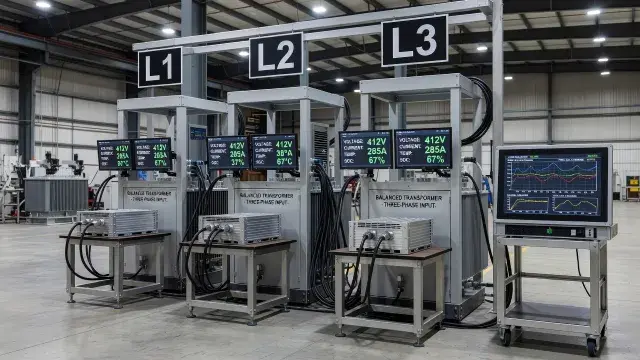
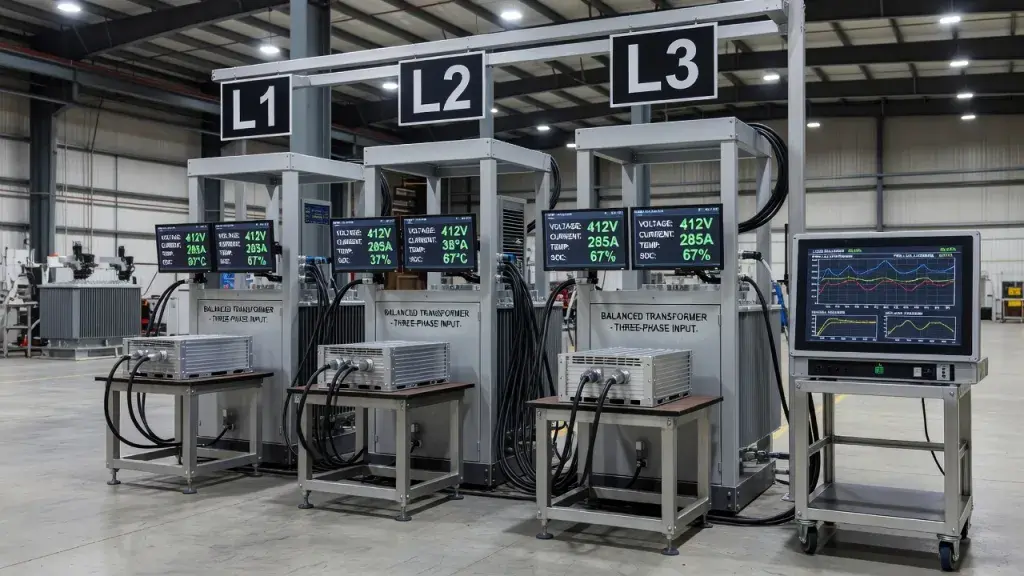
A three-phase circuit delivers power in overlapping waves rather than a single pulse, which is precisely why it charges faster and more evenly than standard single-phase setups. That detail matters enormously when you're staging a demonstration meant to prove a point to engineers, investors, or curious operators standing on a factory floor. Get the phase timing wrong, and the whole exercise looks sloppy. Get it right, and a 3 charge buffalo demonstration becomes the clearest way to show what modern electric charging infrastructure can actually do.
Running this kind of demo isn't about flipping a switch and hoping for the best. It requires a working knowledge of load balancing, battery chemistry, and the quirks of the specific hardware you're testing. Some teams even use simulation environments to rehearse sequencing before touching real equipment - for instance, a 3 charge buffalo demo built around scenario planning can help operators anticipate failure points before they show up in front of an audience. The stakes are higher than a typical bench test, since a live buffalo charging demo often serves as the deciding factor in whether a client signs off on a full station rollout.
What follows is a practical walkthrough: how to prepare the station, sequence a three phase charge demo correctly, run battery diagnostics that hold up to scrutiny, and interpret the results without overselling them.
Understanding the 3 Charge Buffalo Concept
The term refers to a testing protocol built around three simultaneous charging channels, each drawing from a separate phase of a three-phase power supply. The "buffalo" naming convention, common in demo environments for heavy-duty charging equipment, signals a rig designed to handle sustained, high-current loads without thermal throttling. This isn't a casual desktop test - it's meant to simulate real-world commercial charging conditions.
What Makes It Different from Standard Charging Tests
Single-phase testing shows you how one battery behaves under one current profile. A 3 charge buffalo configuration shows you how three units behave simultaneously under shared but independently phased power, which is the actual condition most commercial charging stations operate under. The difference is not cosmetic. Shared infrastructure introduces voltage sag, phase imbalance, and thermal interaction between adjacent charging bays - none of which a single-unit test can reveal.
Why Buffalo-Style Demos Are Used for Certification
Manufacturers and installers rely on this format because it stresses the system the way a busy public charging site would. A buffalo electric charging station meant for commercial deployment has to prove it can run three high-draw sessions at once without any single bay degrading in performance. Demos of this kind are frequently the last step before a station design gets approved for mass installation.
Preparing for the Demonstration
Preparation determines roughly eighty percent of whether a demo goes smoothly. Rushing setup is the single most common reason live tests fail in front of an audience.
Site and Power Requirements
You need a confirmed three-phase supply with balanced voltage across all legs - typically within a five percent tolerance of nominal. Check the transformer capacity ahead of time; undersized transformers are the quiet killer of otherwise well-planned demos. Confirm grounding, breaker ratings, and cable gauge match the expected peak current draw of all three charging channels combined, not just one.
Equipment Checklist
- Three-phase power analyzer with per-leg voltage and current logging
- Calibrated battery test benches or actual vehicle/battery packs for each charge channel
- Thermal imaging camera or embedded temperature sensors on connectors and cells
- Data logging software capable of synchronized multi-channel capture
- Backup breaker panel in case of overcurrent trip during peak load
Safety Protocols Before Power-On
Every buffalo charging demo should begin with an insulation resistance test on all cables and connectors. Verify emergency stop functionality on each charging channel independently - a shared kill switch is not sufficient for a three-unit setup. Brief every person present, technical or not, on what an abnormal reading looks like and who has authority to halt the test.
Setting Up the Three-Phase Charging Demo
This is where the actual electrical choreography happens. A three phase charge demo succeeds or fails based on how well the three channels are synchronized and monitored.
Configuring the Phase Sequence
Assign each charging channel to a distinct phase (L1, L2, L3) and confirm phase rotation with a rotation meter before connecting any battery. Incorrect rotation won't always trip a breaker immediately, but it will produce erratic current readings that are easy to misdiagnose as a battery fault rather than a wiring error.
Balancing Load Across Channels
Stagger the start times of each charging session by a few seconds rather than triggering all three simultaneously. This reduces inrush current spikes and gives the power analyzer a cleaner baseline to measure against. A well-run buffalo electric charging station demo will show near-identical charge curves across all three channels once the stagger settles out, which is the visual proof most audiences are looking for.
Monitoring Voltage and Current in Real Time
Keep the power analyzer display visible to observers throughout the test. Numbers that update live carry more credibility than a summary chart shown afterward. Watch specifically for phase imbalance exceeding your pre-set tolerance - that's the earliest warning sign of a wiring or load-distribution problem.
Conducting the Battery Charging Buffalo Demonstration
With power flowing correctly across all three phases, attention shifts to the batteries themselves. This stage is where most technical questions from an audience actually arise.
Selecting Battery Types for the Test
Lithium-ion packs remain the standard choice because their charge curves are well documented and predictable, which makes anomalies easy to spot. If the demo is meant to represent a specific commercial application, match the battery chemistry and capacity to what real customers would actually deploy - testing an oversized or undersized pack skews the results and undermines the credibility of the whole battery charging buffalo demonstration.
Running Charge Cycles and Recording Data
Log voltage, current, temperature, and state of charge at consistent intervals - every fifteen to thirty seconds is typical for a demo lasting under an hour. Run at least one full charge cycle per battery rather than a partial demonstration; partial cycles hide the tail-end behavior where most thermal issues actually appear.
Identifying Anomalies and Failure Points
Watch for voltage plateaus that last longer than expected, which usually signal internal resistance building up in an aging cell. Temperature spikes that don't correlate with current draw are another red flag worth pausing the demo to investigate rather than pushing through for the sake of the schedule.
Interpreting Results and Reporting Outcomes
Raw data means little without context. The final value of any demo comes from how clearly you translate numbers into conclusions an audience can act on.
Reading the Charge Curves
Compare the three channels side by side. Near-identical curves confirm the station handles simultaneous three-phase loads without one bay stealing capacity from another. Divergent curves point to a specific hardware or wiring issue that needs isolating before the station is approved for deployment.
Documenting Thermal and Electrical Performance
Compile temperature logs alongside current draw for each channel into a single report. Reviewers and decision-makers generally trust a demo more when the thermal data is presented plainly rather than summarized into a single pass/fail label.
Communicating Findings to Stakeholders
Translate technical readings into business-relevant language: charge time per session, expected throughput per day, and any maintenance flags. A clear, honest report from a buffalo charging demo builds more long-term trust than an overly polished presentation that glosses over minor irregularities.
Frequently Asked Questions
How long does a full three-phase charge demo typically take to run?
Most demonstrations run between forty-five minutes and two hours, depending on battery capacity and how many complete charge cycles you want to log. Rushing the timeline to fit a shorter meeting slot usually means sacrificing the data needed to catch thermal issues.
Can a 3 charge buffalo demo be run safely on a single-phase supply?
No. The entire point of the demonstration is to show how the system behaves under genuine three-phase conditions, and simulating that with a single-phase supply through adapters produces misleading results that won't reflect real deployment behavior.
What's the biggest cause of failure in live buffalo charging demonstrations?
Phase imbalance caused by uneven transformer loading or poor cable sizing is the most common culprit. It often shows up only under sustained load, which is why pre-test power analysis matters more than most teams initially assume.
Do all three charging channels need to use the same battery type?
Not necessarily, but mixing chemistries makes it harder to compare charge curves directly. If the goal is a clean comparison, matching battery type and capacity across all three channels gives the clearest read on station performance.
How do you know if a battery charging buffalo demonstration passed or failed?
There's rarely a strict binary outcome. Success generally means all three channels stayed within voltage and thermal tolerance, charge curves remained consistent, and no safety system triggered unexpectedly during the full cycle.
Is specialized software required to log three-phase demo data?
A dedicated multi-channel data logger or power analyzer with synchronized timestamps is strongly recommended. Manually recording readings from three separate channels introduces timing errors that make it difficult to spot subtle imbalance issues.